
Elisa Markes-Young
In her work Elisa Markes-Young uses mostly fibres, textiles, techniques and skills that are - at least in cultures of European origin - traditionally attributed to the female field of experience. The aim is to recreate not so much figurative works but rather the mood.
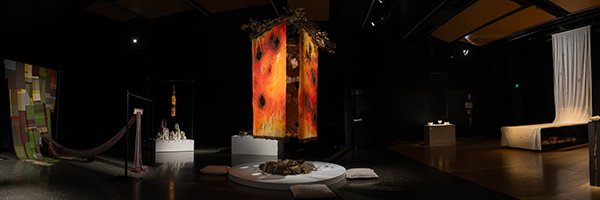
Gathering Ground
2026
Curated by Elisa Markes-Young, Gathering Ground wants to explore the profound human need for home, belonging, and connection in the...
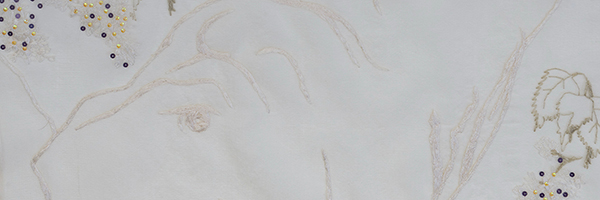
Flores Poloniae
2025
An exploration of representations of the male body in Polish visual culture, examining its political, religious, and moral significance...
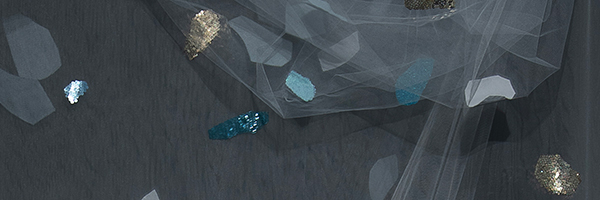
Blue Almonds & Strawberry Ice Cream
2023
A poetic contemplation of the ‘what-ifs’ of imagined futures and the ‘not-quite’ of misremembered pasts.
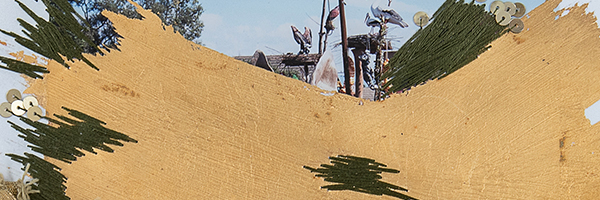
Gilded Things
2022
Works shown in December 2022 as part of “Rewilding the Past”, at Jan Mullen’s December Gallery.
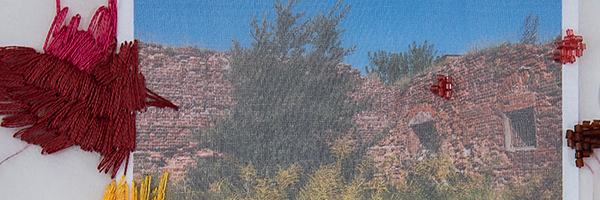
Rewilding the Past
2022
Works shown in December 2022 as part of “Rewilding the Past”, at Jan Mullen’s December Gallery.
Memory of a Memory
2022
Works shown in December 2022 as part of “Rewilding the Past”, at Jan Mullen’s December Gallery.
Klechdy domowe
2021
As with many countries, Poland has a complex system of symbols and rituals designed to make a place...
Oblivion
2021
Oblivion is a word heavy with meaning and the threat thereof is central to the contemporary mindset...
Saudade
2020-21
A continuation of Elisa Markes-Young’s previous work that dealt with memory, the unreliability of our recollections and the question...
The Original Place
2012-19
Elisa was born in Poland, grew up in Germany and have been in Australia since 2002. The excitement of living in a foreign country is accompanied by an intense feeling of displacement...
Broken Places
2018
“The world breaks everyone, then some become strong at the broken places.” - Ernest Hemingway. A response to works in the Bunbury Regional Art Gallery (BRAG) Collection.
The Strange Quiet of Things Misplaced
2007-11
Memory is a mystery. We imagine it as being some sort of a cupboard where things are stored and pulled out when needed...
Long Departed Landscapes
2007
Long Departed Landscapes is a series in which Elisa tried to recreate the colours and the feeling of Poland as she remembers it...
What I Am
2005-06
Trying to navigate between the Polish origins, German influences and Australian surroundings, Elisa recognizes that self-reflection is crucial to her identity: It is a reflection on the variations of her ‘handed-down’ identity...
Beginnings, Series I
2005
The Beginnings series were inspired by the processes and transformations we observe during a lifetime of a plant, especially the process of setting seed and spreading. It's the beauty of the seed capsules, the various shapes, the ways in which they break when ripe to disperse the seeds...
Beginnings, Series II
2005
The works explore themes of germination and growth, fragility and decay. Elisa says that all her artworks are as much about subject matter as they are about visual and emotional experiences.
The Slow Infinity of Dreaming
2004
The Slow Infinity of Dreaming relates to the feeling of timelessness and the tranquillity of the Australian landscape. It describes the dreaminess I feel...
Collared
2003
Collared was a group exhibition in the course of the Fringe Festival 2003 at Kurb Gallery in Perth. Artists interested in participating were given a white business shirt and asked to create an artwork...
Public Art
Here you can see public art projects that Elisa has worked on, including design development...
Latest News
Read more about what Elisa is up to including upcoming exhibitions, awards and other events...
Contact Us
Phone: 0421 974 329 (Chris)
Email: write to us!
Newsletter: Subscribe
Web: zebra-factory.com