
What I Am
Elisa Markes-Young
With her cross-cultural biography (born in Poland, grew up in Germany and in Australia since 2002) Elisa Markes-Young’s identity is punctuated by the question of how Polish or German she really is. It is also very much defined by the feeling of being caught between two worlds.
The excitement of living in a foreign country is accompanied by an intense feeling of displacement. Being a stranger and ‘different’, having to master another language and the mentality of a new place creates a feeling of insignificance and inadequacy.
Trying to navigate between the Polish origins, German influences and Australian surroundings, Elisa recognizes that self-reflection is crucial to her identity: It is a reflection on the variations of her ‘handed-down’ identity. Elisa feels that because of this she is in a constant process of destruction and restoration.
The basic need to belong and fit in competes with the fear that the differences will be lost and with the need to defend and preserve the uniqueness, the culture and the history that shaped her.
On the other hand, if she defines her identity in relation to her past and holds on to it she faces isolation.
Please contact Elisa via 0421 974 329 (Christopher Young, Western Australia, GMT+8) should you be interested in purchasing work for $600/ea.
Framing can be included for your convenience and is done by a professional framer.
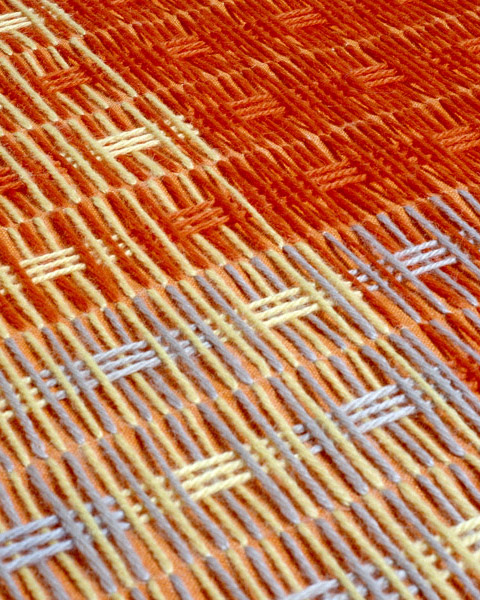
Elisa Markes-Young, What I Am #03 (detail), 2006
Contact Us
Phone: 0421 974 329 (Chris)
Email: write to us!
Newsletter: Subscribe
Web: zebra-factory.com